Technical Resources

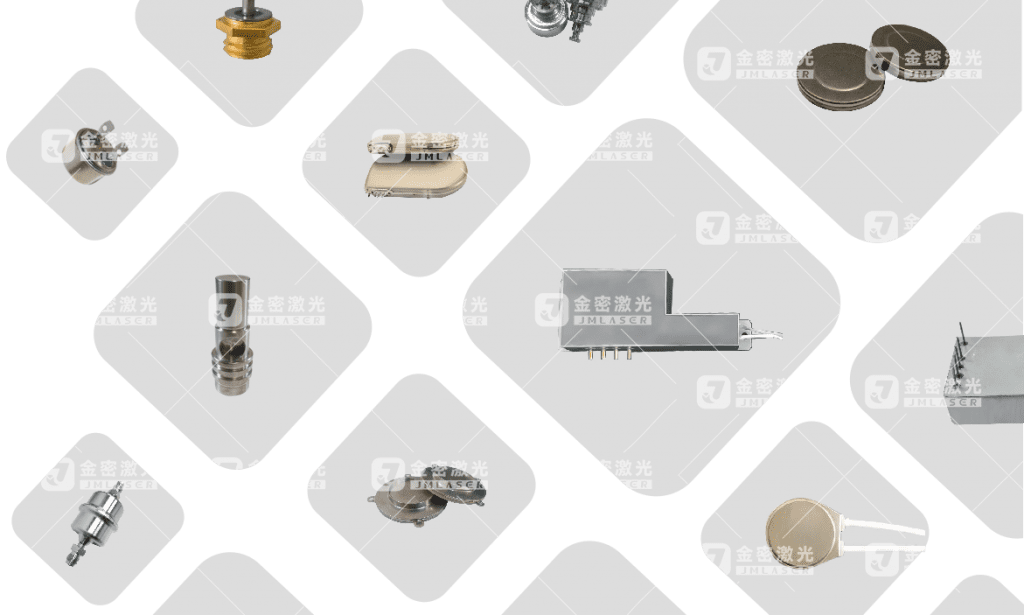
Provide resources related to metal shell packaging

We are very willing to share all the resources related to metal shell airtight sealing. In the process of communicating with our customers, we learn from each other and make progress, which is very beneficial for both us and our customers
Published technical guides

Start with weld quality fundamentals

These guides replace the former placeholder reading list. Each article links diagnosis, process control and inspection so the library can grow into a connected knowledge network.

L1 · Core conceptWhat Is Laser Hermetic Sealing and When Is It Used?Learn what laser hermetic sealing does, when a welded metal enclosure needs it, and how joint design, atmosphere control and leak testing work together. L3/L4 · Material and industry applicationKovar Laser Welding for Electronic and Semiconductor PackagesUnderstand why Kovar is used in hermetic electronic packages and how joint design, plating, fit-up, shielding and inspection affect laser-welded closures. L5 · Inspection and validationHelium Leak Testing for Laser-Welded Hermetic PackagesPlan helium leak testing for laser-welded packages by selecting the method, defining conditions, controlling calibration and adding gross-leak screening. L1 · Hermetic sealing fundamentalsLaser Hermetic Welding vs Conventional Laser Welding: Key Design DifferencesCompare laser hermetic welding with general laser welding through seal design, atmosphere control, seam continuity, thermal limits and package verification. L3 · Materials and weldabilityTitanium Hermetic Laser Welding: Shielding, Fit-Up and InspectionDevelop titanium hermetic laser welds by coordinating material identity, shielding coverage, joint fit-up, seam transitions and package leak inspection. L5 · Inspection and validationGross Leak vs Fine Leak Testing for Hermetic PackagesUnderstand why hermetic packages need gross- and fine-leak coverage, how tracer loss can mislead testing, and how to review test sequence and failure evidence. L2 · Atmosphere and process controlGlovebox Laser Welding Process: From Purging to Final InspectionPlan a glovebox laser welding workflow with defined checks for atmosphere preparation, part transfer, fit-up, seam closure, cooling and final inspection. L3 · Materials and weldabilityWhy Kovar Is Used in Hermetic Electronic PackagesLearn how Kovar supports hermetic electronic package design through controlled thermal expansion, material matching and clear separation of seal interfaces. L5 · Inspection and validationUnderstanding Leak-Rate Units and Acceptance Criteria for Hermetic PackagesRead hermetic-package leak specifications using correct unit conversions, gas and test conditions, calibrated measurements and a documented acceptance rule. L2 · Defect diagnosisLaser Weld Cracks: Types, Causes and PreventionIdentify common laser weld crack mechanisms, trace likely material and process causes, and build a controlled prevention and verification plan. L2 · Defect diagnosisHow to Diagnose and Prevent Porosity in Precision Laser WeldsUse pore shape, location and process evidence to distinguish contamination, gas entrapment and keyhole instability in precision laser welds. L2 · Process controlHow to Measure and Control Laser Weld PenetrationLearn how to define, measure and control laser weld penetration using representative cross-sections, process evidence and qualified limits. L2 · Defect diagnosisLaser Weld Discoloration and Blackening: Causes and PreventionDiagnose laser weld discoloration by separating oxidation, contamination, spatter and excess heat, with guidance for stainless steel and titanium. L2 · Defect diagnosisLaser Welding Undercut: Causes, Inspection and Corrective ActionsUnderstand laser welding undercut, distinguish it from surface concavity, and correct energy, alignment, fit-up and molten-metal flow causes. L3 · Inspection and validationLaser Weld Quality Inspection Methods for Hermetic SealingBuild a risk-based laser weld inspection plan using visual, dimensional, penetrant, radiographic, metallographic and helium leak methods.

process database

materials
0 +
products
0 +

Our process database has accumulated a large amount of welding process data for different materials and products, which is a huge support for us to quickly and perfectly complete various strict requirements

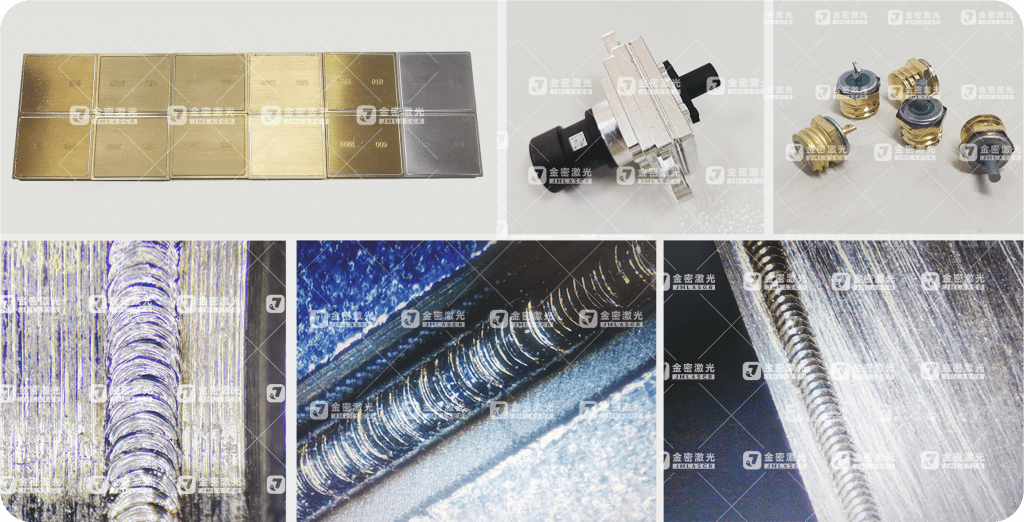
Precision laser welding sample

Laser welding technology

This column delivers in-depth analysis of cutting-edge precision laser welding technologies, sharing critical process parameters and field-proven expertise for aerospace, semiconductor, implantable medical devices, and electronic packaging sectors. Focusing on complex scenarios involving stainless steel/aluminum/Kovar alloy/titanium/dissimilar metal joining, we dissect industry challenges—from porosity control to thermal distortion management and penetration stability—through JMLASER’s extensive engineering case studies, empowering engineers to tackle material compatibility and structural integrity challenges.

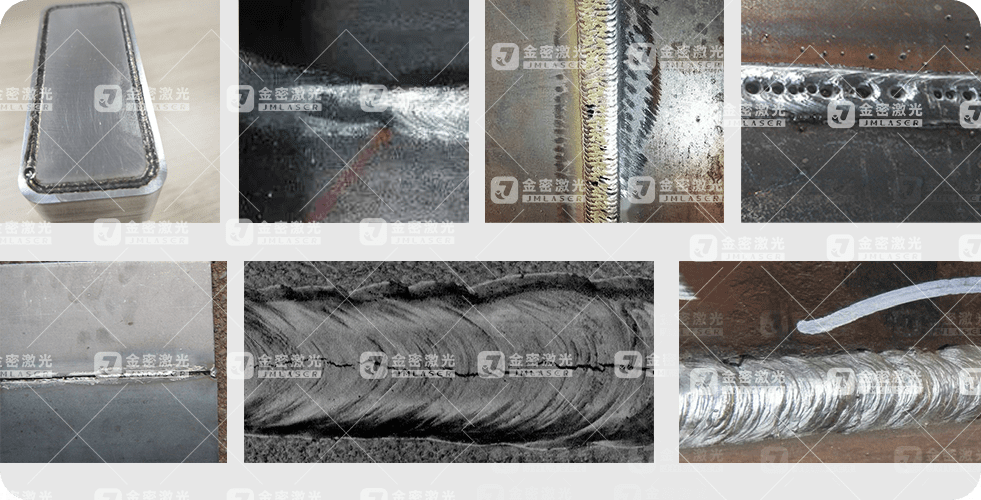
Poor welding

Defects that are prone to occur during welding are generally blackening, collapse, splashing, porosity, incomplete penetration, cracks, undercutting, gas leakage, etc.

Perfect welding

a smooth and flat weld seam, without welding defects such as cracks and pores, and can meet the corresponding airtightness requirements through helium mass spectrometry leak detection.

Common laser weld defects
Precision laser welding sample

Technical Standard Library

Category Standard Application Industry Key Requirement Region
Materials
AMS 4911H
Aerospace Titanium
Aerospace/Defense
Tensile Strength≥895MPa
🇺🇸
JIS H 8602
Anodized Aluminum
Microwave
Coating Thickness 25±3μm
🇯🇵
KS D 6710
High-Si Aluminum
Automotive
Si Content 12-13%
🇰🇷
Welding
MIL-STD-2219D
Military Laser Welding
Defense
Depth-to-Width Ratio≥5:1
🇺🇸
DIN 32525-4
Laser Weld Quality
Industrial
Penetration Tolerance±5%
🇩🇪
JEITA ED-4703
Package Reliability
Semiconductor
1000 Temp Cycles<0.1% Fail
🇯🇵
Sealing Test
MIL-STD-750E
Military Fine Leak Test
Defense
He Leak Rate≤1×10⁻⁸ cc/s
🇺🇸
ESCC 9030
Space Hermetic Sealing
Aerospace
Dual Leak Test Verification
🇪🇺
KS B 0895
Helium Leak Test (KR)
General
Sensitivity≤1×10⁻⁷ Pa·m³/s
🇰🇷
High-Frequency
IPC-4103E
RF Laminates Performance
Microwave Circuits
Dk±0.05@10GHz
🌍
IEC 61189-5-503
Microwave Cavity Q Test
RF Components
0.1-40GHz Frequency Range
🌍
Industry Spec.
ISO 13485:2016
Medical Device QMS
Medical
Aseptic Welding Protocol
🌍
AS9100D
Aerospace QMS
Aerospace
Weld Parameter Traceability
🇺🇸
GJB 548C-2021
Military Thermal Shock
Defense
-65°C↔150°C 1000 Cycles
🇨🇳
MIL-STD-750E

The “Microelectronics Device Test Method Standard” issued by the US Department of Defense, in which Method 1071 is dedicated to helium mass spectrometry leak detection certification for high-value military devices, is the gold standard for military electronic packaging sealing testing

Military grade testing requirements
Comparison with Civil Standards
Parameter MIL-STD-750E ISO 3530
Sensitivity
1×10⁻⁸ cc/s He
5×10⁻⁸ Pa·m³/s
Calibration Frequency
Daily + Pre-Test Calibration
Weekly
Vacuum Integrity Verification
30-min Pressure Rise <5%
Not Specified
Data Integrity
Military-grade Audit Trail
Basic Electronic Records
Related interpretations
Scroll to Top